
The short answer
No, EMS training is not dangerous when done under professional supervision with certified equipment. The method has been used in healthcare and rehabilitation for over 50 years, and a large body of research confirms its safety.
That said, there are exceptions and contraindications, just like with any form of exercise.
How does EMS training work?
EMS stands for electrical muscle stimulation. Low-frequency impulses (around 85 Hz) are sent through electrodes in a training suit, causing your muscles to contract. It mimics your body’s own nerve signals, but with broader activation across multiple muscle groups simultaneously.
The impulses only affect skeletal muscles, meaning the ones you can control voluntarily. Your heart, internal organs and smooth muscle tissue are not affected (Kemmler et al., 2012).
Contraindications
There are situations where EMS training is not recommended:
- Pacemaker or other electronic implants - the electrical impulses can interfere with these devices
- Pregnancy - as a precaution, pregnant women should avoid EMS
- Epilepsy - impulses could potentially trigger seizures
- Acute infections or fever - your body needs to focus on fighting the infection
- Open wounds or skin damage in the training area
- Serious cardiovascular conditions - should be discussed with a doctor first
We always go through a health declaration before your first session. If you have questions about your specific situation, we recommend speaking with your doctor.
Professional EMS vs home devices
This is an important distinction. Most reported incidents involving EMS have been linked to home use of cheap, unregulated devices. The problems typically involve:
- Overstimulation without professional guidance
- Incorrect electrode placement
- Equipment without safety certification
- No rest periods or recovery
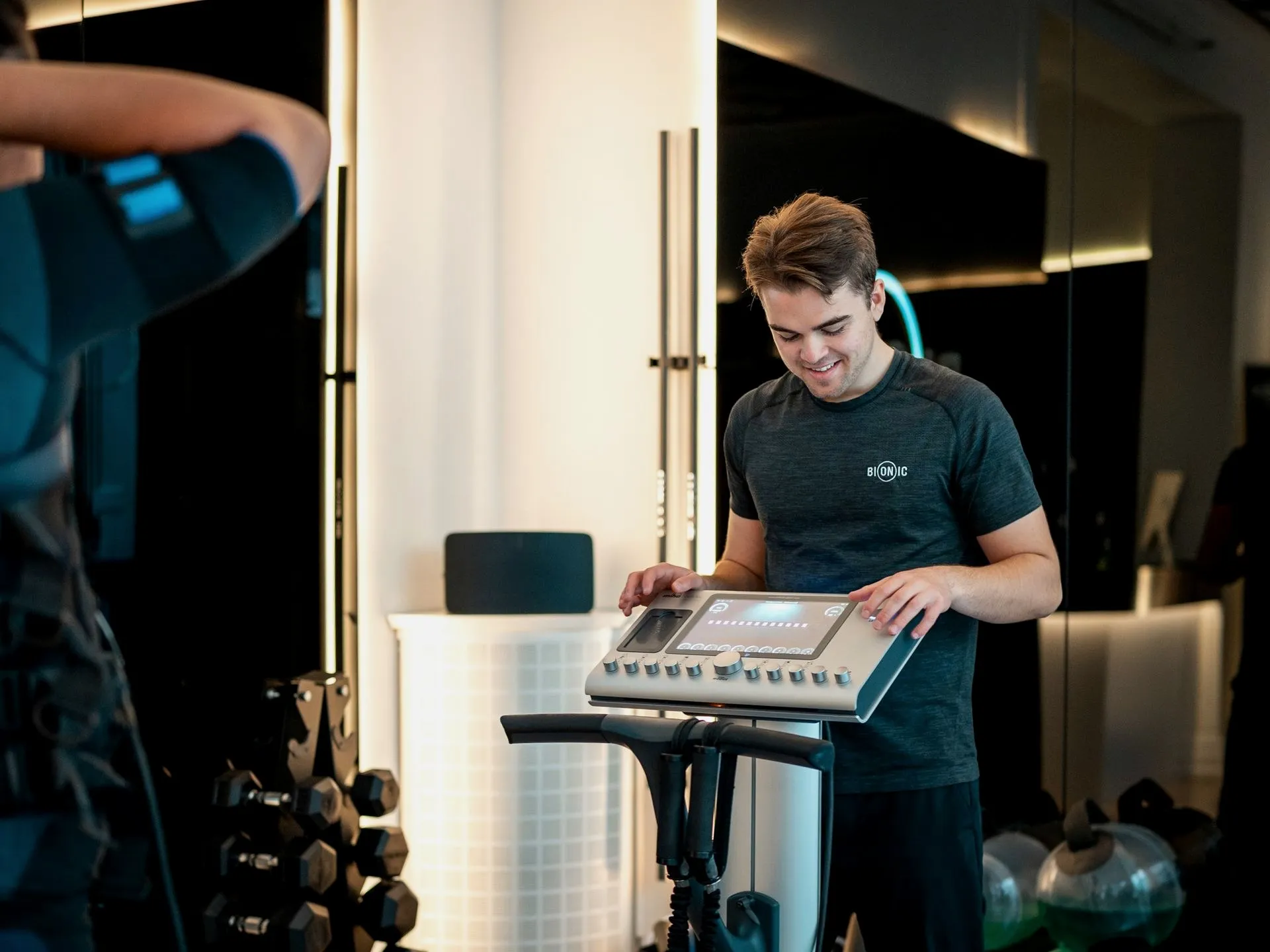
At a professional studio like BIONIC, we use equipment from miha bodytec, a market-leading German manufacturer with medically certified technology. Every session is led by a trained personal trainer who adjusts the intensity based on your feedback.
Rhabdomyolysis
Rhabdomyolysis is a condition where muscle cells break down and release proteins (myoglobin) into the bloodstream, which in rare cases can damage the kidneys. It has been reported after extreme physical exertion, including improper use of EMS.
The risk under professional supervision is extremely low. Documented cases have almost exclusively been linked to:
- Unrealistically high impulse intensity
- First session with excessive load
- Dehydration combined with intense training
- Unsupervised home use
At BIONIC, we always start conservatively, especially during your first session. Intensity is increased gradually as you get familiar with the training method. We also recommend drinking plenty of water before and after your session.
What does the research say?
A major systematic review (Filipovic et al., 2012) analysing hundreds of studies concluded that whole-body EMS is a safe training method under controlled conditions. No serious side effects were reported in studies that followed established protocols.
Common, harmless effects after an EMS session:
- Muscle soreness (DOMS), often more intense than after regular training
- Temporary fatigue
- Muscle stiffness for the next day or two
These effects are normal and diminish as your body adapts. Most people experience noticeably less soreness by their third or fourth session.
How to minimise risk
- Complete the health declaration honestly before your first session
- Mention any injuries or limitations so your trainer can adjust accordingly
- Drink water generously before and after training
- Tell your trainer if something feels wrong during the session
- Rest 48 hours between EMS sessions
- Skip training if you are sick, feverish or exhausted
Summary
EMS training is a safe method with a long, documented history in both rehabilitation and fitness. The vast majority of risks are eliminated by professional supervision, certified equipment and individualised intensity.
Have more questions? Check our FAQ or get in touch directly.
Ready to try it? Book a trial session at half price.