
What is EMS training?
Electrical muscle stimulation. A well-proven method that creates high-intensity strength training without weights.
What does EMS stand for?
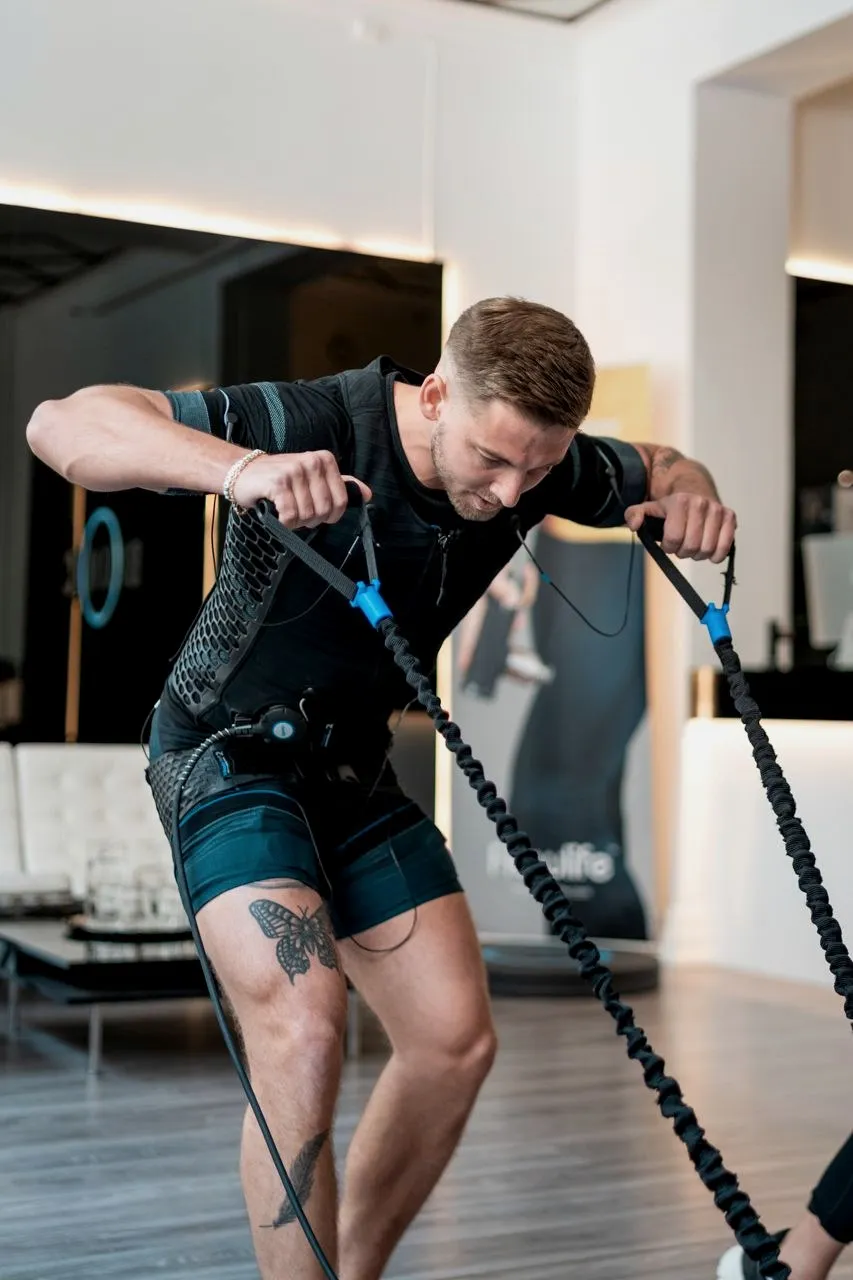
EMS stands for electrical muscle stimulation. During the session you wear a suit with electrodes that send gentle impulses to your muscles while you do the exercises with your trainer.
The impulses reach all major muscle groups at once, which is why 20 minutes is enough.
How does EMS work?
EMS stands for electrical muscle stimulation and works as a harmless amplifier of the body's natural nerve impulses. When we perform a movement, the brain sends a signal telling the muscle to contract — and it's these signals that are amplified during EMS training.
The muscle can't tell whether the command comes from the brain or from outside, which means you have to work harder to complete each movement. This creates an intense full-body workout with dynamic and static exercises — without any weights.
What does it feel like?
An EMS session works in four-second intervals — the electrical impulse is on for four seconds, then off for four seconds, for 20 minutes.
The impulse is best described as an intense vibration. It's constant for four seconds and nothing like an electric shock, but it causes many muscles to contract simultaneously.
Training should feel intense but not painful. Muscle soreness is common in the beginning and typically peaks a couple of days after your session.
What results does it give?
In a study where untrained men aged 30 to 50 trained for 16 weeks, 20-minute EMS sessions produced gains in muscle mass and leg strength on a par with classic strength training (Kemmler et al. 2016).
Studies have measured around 400 kcal during an EMS session (Kemmler et al. 2012), and energy expenditure stays elevated for up to three days afterwards (Teschler et al. 2018).
Benefits of EMS
Time-efficient
20 minutes is enough. All major muscle groups are activated at once, in four-second intervals.
Build muscle
Rapid recruitment of fast-twitch muscle fibers that contribute to muscle growth and strength development.
Burn fat
Around 400 kcal per session, with elevated energy expenditure for up to three days afterwards.
Joint-friendly
No external weights means no stress on joints and ligaments. Perfect for rehabilitation.
Prevent injuries
Strengthen deep back muscles, pelvic floor and core. EMS has been used successfully against osteoporosis.
All fitness levels
No prior training experience needed. Exercises and impulse intensity are adapted to your goals and abilities.
Is it dangerous?
No. An impressive number of studies have confirmed that the method is completely safe. EMS training only activates skeletal muscles — the voluntary, trainable muscles in your body. Smooth muscles, the heart and other organs are not affected.
Contraindications, risks and what separates studio training from home use are covered in our article Is EMS training dangerous?
EMS machine at home or in a studio?
The incidents reported with EMS have almost exclusively involved cheap home devices used without supervision.
The international guideline for whole-body EMS from 2023 advises firmly against training without supervision.
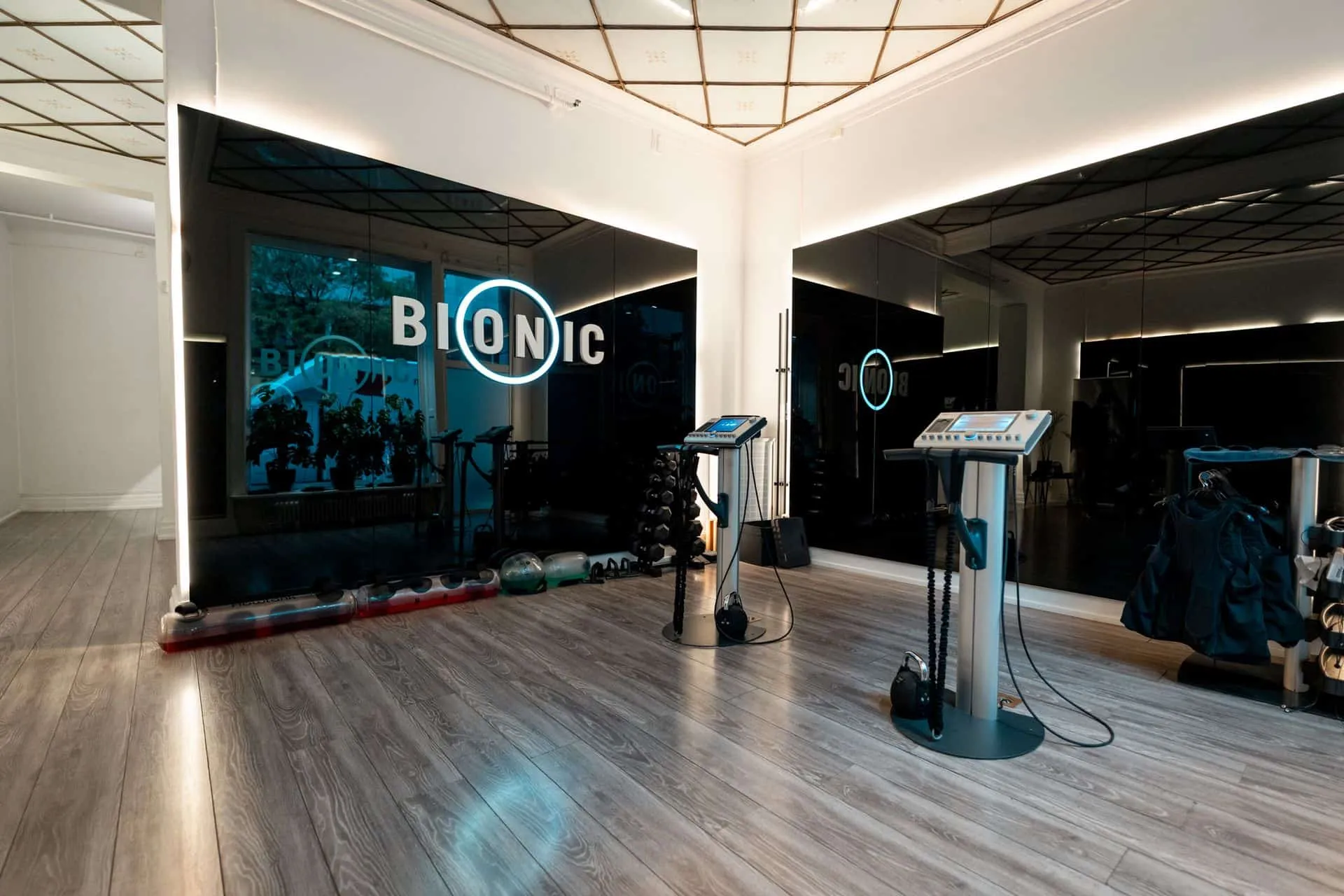
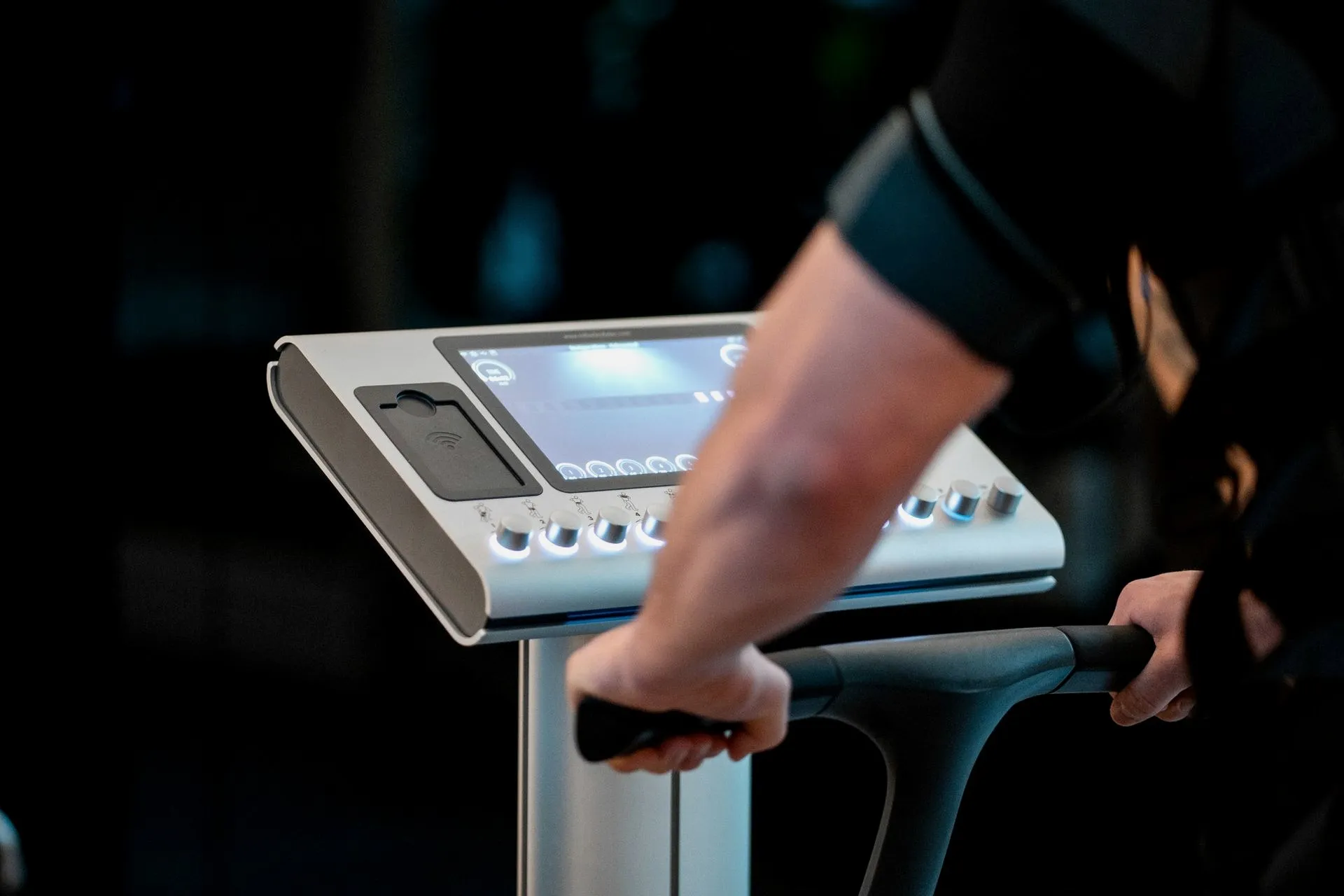
At BIONIC you train on miha bodytec equipment and always with a personal trainer who controls the intensity.
How often should you train?
Our recommendation is two sessions a week. If you do a lot of other training, one session a week is enough.
Rest at least two days between sessions.
What does it cost?
Credit memberships and credit bundles to suit different needs. All prices include personal trainer, clothing and equipment.
See pricesFAQ
How does EMS training work?
EMS stands for electrical muscle stimulation and works as a harmless amplifier of the body's natural nerve impulses. When we perform a movement, the brain sends a signal telling the muscle to contract — and it's these signals that are amplified during EMS training. The result is that you have to work harder to complete each movement, creating an intense full-body workout with dynamic and static exercises without weights.
Is EMS safe?
Yes. An impressive number of studies have confirmed that the method is completely safe. EMS training only activates skeletal muscles — the voluntary, trainable muscles in your body. Smooth muscles, the heart and other organs are not affected. Electrical muscle stimulation originally comes from rehabilitation.
What should I keep in mind before and after training?
It's important that you feel healthy since the training is high-intensity. Drink plenty of fluids before training. Don't train on an empty stomach — eat a light meal a couple of hours beforehand. After training, we recommend plenty of water and a proper meal within the next few hours.
What does EMS training feel like?
An EMS session works in four-second intervals — the impulse is on for four seconds and off for four seconds, for 20 minutes. The impulse is best described as an intense vibration and is nothing like an electric shock. Training should feel intense but not painful. Muscle soreness is common in the beginning.
What are the advantages of EMS compared to regular training?
The advantage lies in the rapid recruitment of fast-twitch muscle fibers that contribute to muscle growth and strength development. In traditional strength training, these are often only activated at the end of a session and at high intensity. EMS reduces the load on joints and ligaments since no external weights are used.
Is EMS training hard work?
Yes, EMS training can and should be challenging. Our personal trainers help you push through the session and progress toward your goals. You always decide how hard you want to train and where your limits are.
Will I get sore?
Most people get significant muscle soreness after their first EMS session. Soreness is often stronger when you challenge your body with something it's not used to. Two days after the session is typically when soreness peaks.
Do I need training experience to get started?
No. EMS training is suitable for all ages, from beginners to elite athletes. Training is always adapted to the individual's goals and abilities, both in terms of exercises and impulse intensity.
What EMS equipment does Bionic use?
We work exclusively with EMS equipment from market-leading miha bodytec. Their equipment combines innovative technology with high comfort and uses low-frequency impulses (85 hertz).
When should I not train with EMS?
Healthy people who can exercise can perform EMS training. Exceptions apply for: pacemakers or other electronic implants, neurological conditions, diabetes, cardiovascular disease, cancer or tumors, tuberculosis. During infections, colds or pregnancy, you should wait.
Does EMS help with back pain?
Yes. Back problems often arise from weak muscles or muscular imbalances. EMS can build up the muscles, including deep back muscles. Our trainers help you with functional exercises that strengthen the back.
Can EMS training damage the heart?
The electrical impulses are harmless to the heart and organs. During EMS training, we work with low frequencies that stimulate the muscles and do not reach the heart or other internal organs.
Ready to try EMS?
Book your trial session at half price. You always train with a personal trainer.